Mastering the Procure-to-Pay (P2P) Cycle in Oracle Fusion Cloud
From a business need to a controlled supplier payment: P2P is where operating discipline becomes financial confidence.
Omer Al-Okaidi · Oracle Supply Chain & Procurement Consultant
6+ integrated capabilities | 3 matching models | 5 core stages | 100% auditable trail
01 — The End-to-End P2P Process Flow
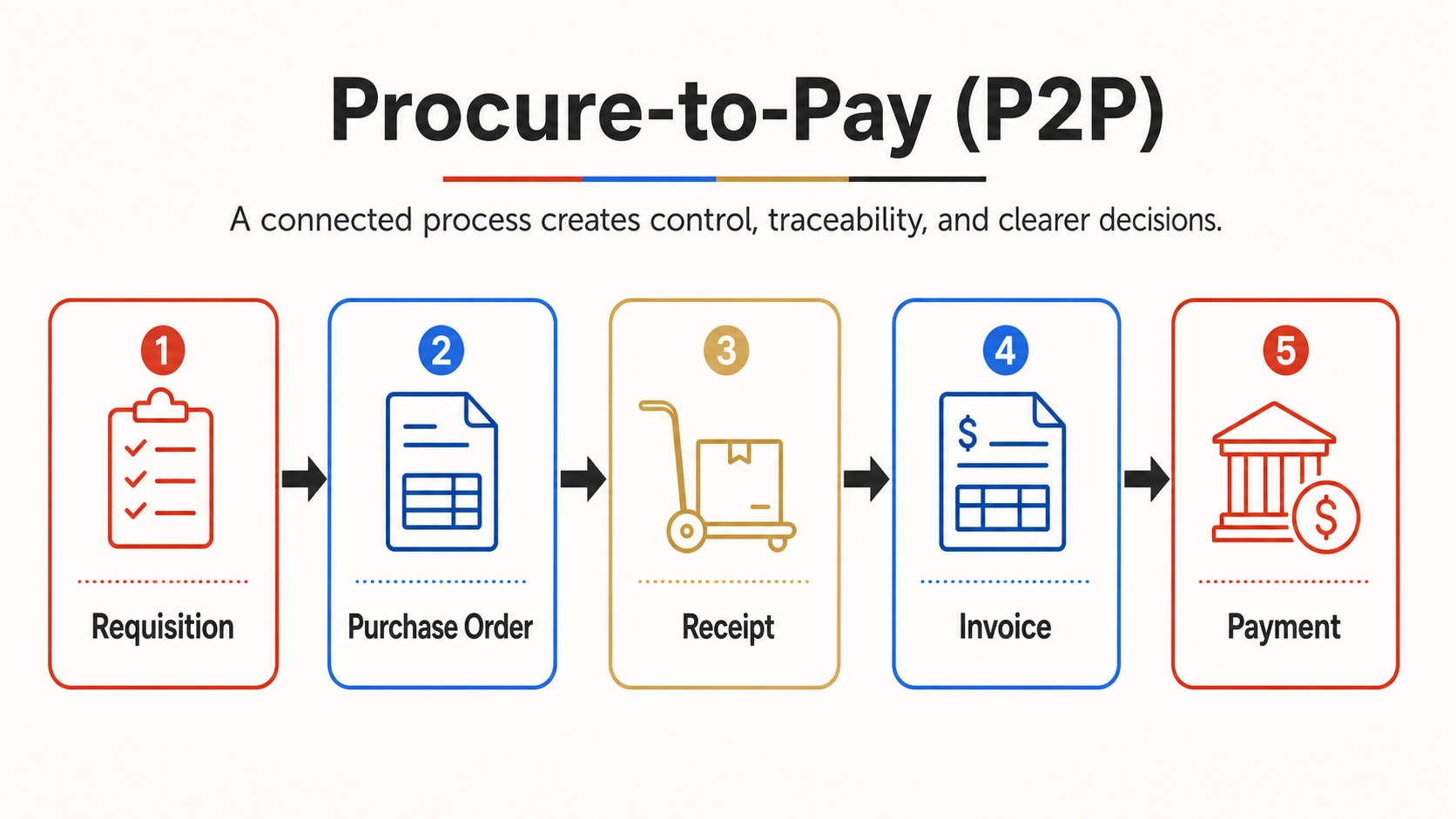
Procure-to-Pay connects requisition, purchase order, receipt, invoice, and payment into one auditable lifecycle. Sourcing activities—RFQ, quotation, analysis, award, and agreement—can sit before the PO where the category requires them. The early design question is which spend should follow which path.
Figure 1. Procure-to-Pay process flow. Illustration by Omer Al-Okaidi.
02 — Inside the Five Stages
STAGE WHAT HAPPENS FUSION MODULE KEY CONTROL
━━━━━━━━━━━━━━━━━━━━━━━━━━━━━━━━━━━━━━━━━━━━━━━━━━━━━━━━━━━━━━━━━━━━━━━━━━━━━━━━━━━━━━━━━━━━━━━━━━
[ 01 ] REQUISITION
Need, quantity, date & charge account → approval
Self-Service Procurement / Intake | Approval hierarchy & budgetary commitment
──────────────────────────────────────────────────────────────────────────────────────────
[ 02 ] PURCHASE ORDER
Approved demand becomes a PO with pricing and terms
Purchasing / Supplier Portal | Contract pricing & PO approval
──────────────────────────────────────────────────────────────────────────────────────────
[ 03 ] RECEIPT
Goods or services are received, inspected, or delivered
Receiving / Inventory | Match readiness & accrual accounting
──────────────────────────────────────────────────────────────────────────────────────────
[ 04 ] INVOICE
Invoice is matched, validated, taxed, and approved
Payables / Subledger Accounting | Matching tolerances & holds
──────────────────────────────────────────────────────────────────────────────────────────
[ 05 ] PAYMENT
Payment Process Request selects, formats, confirms, and clears payment
Payments / Cash Management | Payment controls & bank reconciliation
03 — The Different Types of P2P Flows
Catalog purchasing: local, punchout, and informational catalogs for repeatable demand.
Non-catalog / intake: structured requests needing review before PO creation.
Agreements: blanket and contract purchase agreements for negotiated terms.
Services: milestone, rate-based, or progress-payment models.
Sourcing-led: RFx → award → contract → PO.
Inventory replenishment: min-max or reorder-driven demand.
04 — Invoice Matching: The Control Heart of P2P
2-WAY MATCH ● Purchase Order ─────► ● Invoice
Checks quantity and price against the PO. Best for services and non-inventory.
3-WAY MATCH ● Purchase Order ─────► ● Receipt ─────► ● Invoice
Adds receipt quantity. Best for physical goods and inventory.
4-WAY MATCH ● Purchase Order ─────► ● Receipt ─────► ● Inspection ─────► ● Invoice
Adds inspection acceptance. Best where quality verification matters.
Design guidance: Match the control to the category. Tight tolerances slow payment; loose tolerances increase leakage.
05 — The Accounting Behind the Flow
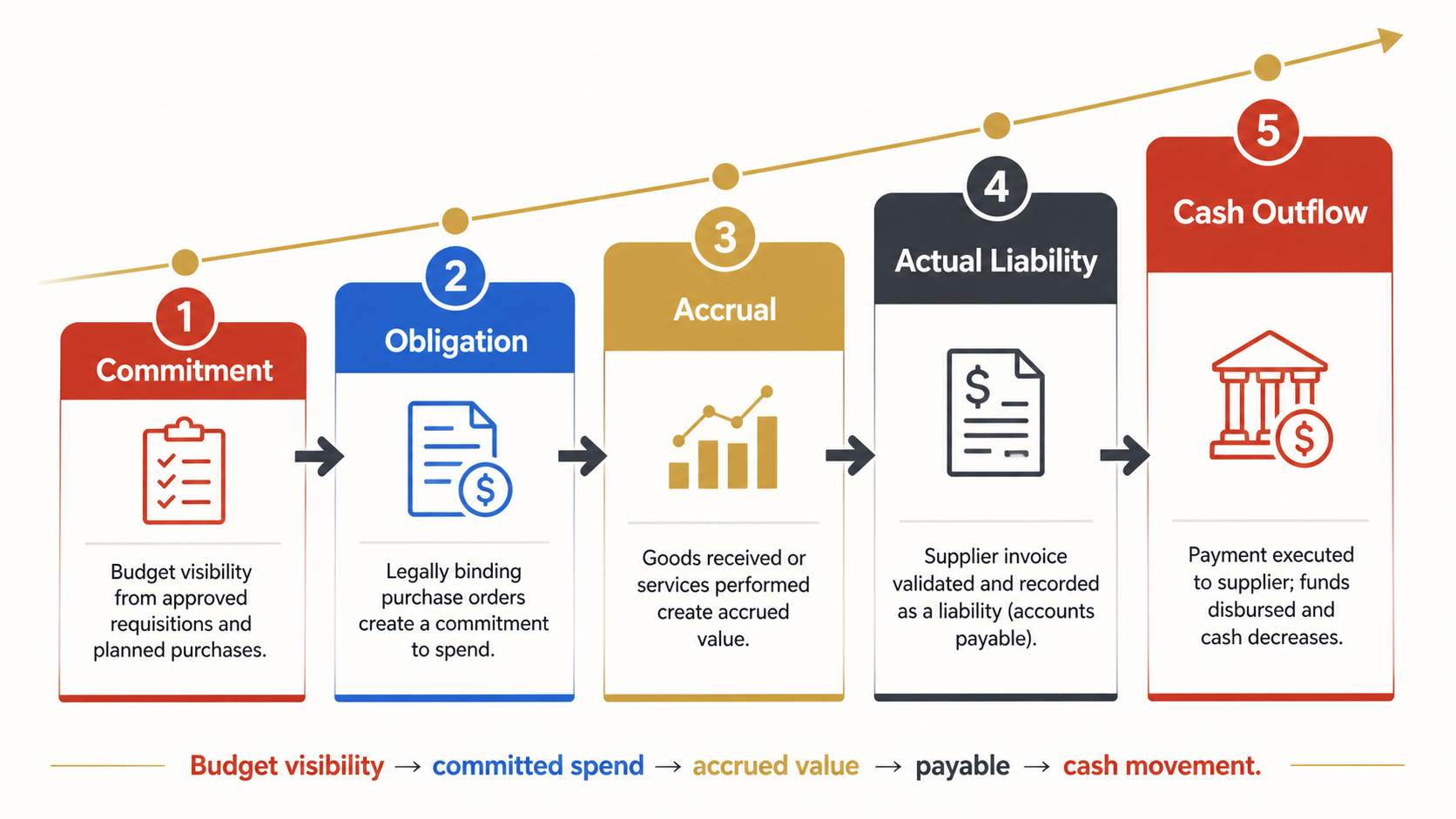
With budgetary control, requisition approval can establish a commitment and PO approval can establish an obligation. Receipt may create an accrual according to policy and costing. Invoice validation creates the payable; payment clears it: Dr Accounts Payable / Cr Cash.
06 — Oracle Capability: EBS vs. Fusion Cloud
◀ ORACLE EBS TRANSFORMATION ORACLE FUSION CLOUD ▶
🖥 User Experience
Forms-based → Redwood UX and guided request experiences
Supplier Collaboration
iSupplier Portal → Unified Supplier Portal
✦ Intelligence
Report-driven → Embedded analytics and evolving AI-assisted capabilities
◉ Budgetary Control
Add-on encumbrance → Native budgetary-control framework
☁ Deployment
On-premises → SaaS with quarterly updates
▣ Analytics
Discoverer / custom BI → OTBI, dashboards, and spend analytics
07 — Business Cases & Solution Design Patterns
Maverick spend: use guided buying, catalogs, agreements, approvals, and budgetary control.
Invoices on hold: calibrate tolerances by category and improve supplier collaboration.
No committed-versus-actual visibility: use encumbrance accounting with requisition-to-invoice analytics.
Manual supplier handling: enable supplier self-service, PO acknowledgement, ASN, and controlled change requests.
08 — Strong Takeaways When Implementing Oracle P2P
• Design the operating model first, configure second.
• Match the matching model to the category.
• Treat budgetary control as a strategic lever.
• Make Supplier Portal collaboration central.
• Standardize with catalogs and agreements.
• Instrument analytics from day one.
• Reconcile receipts and invoices continuously.
Build a P2P Process That Works in the Real World
Oracle Fusion Cloud provides the platform; sound solution design turns it into a controlled, measurable operating model.
Educational disclaimer: This content is educational and should be validated against your licensed Oracle release, enabled features, policy, and applicable accounting guidance.